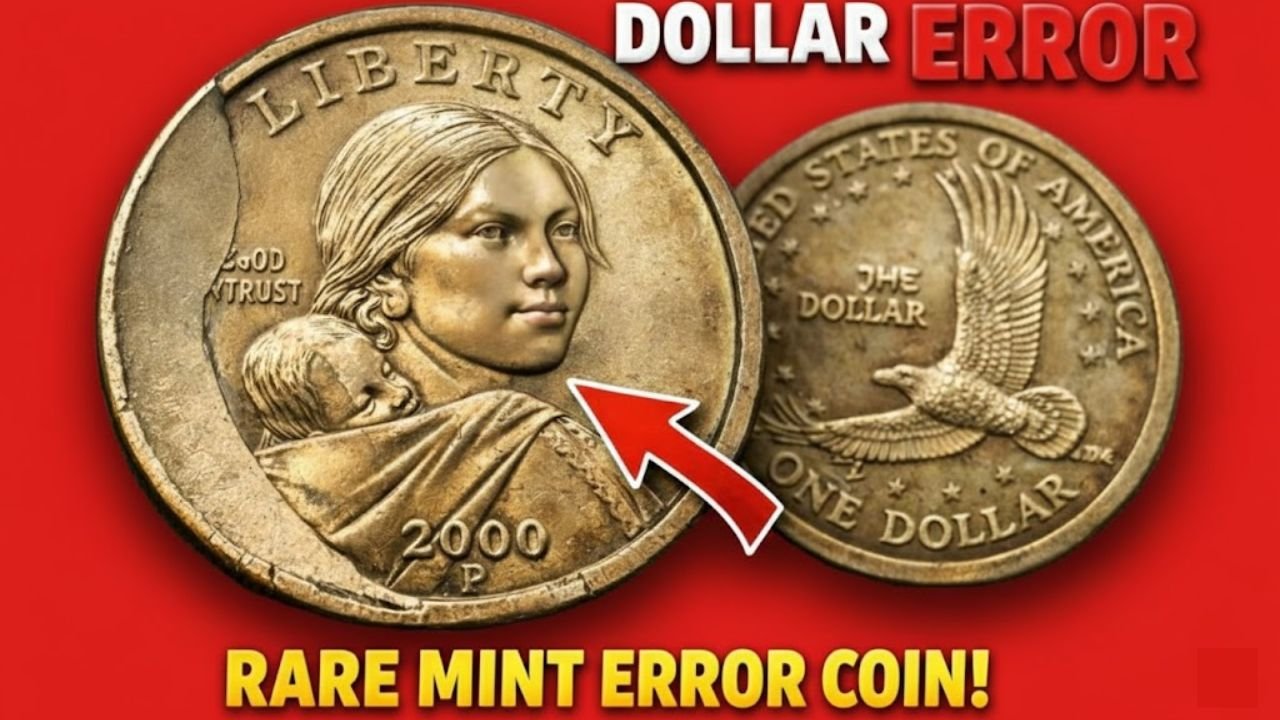
2000 Sacagawea Dollar Error: Imagine finding a coin in your pocket change that’s worth more than a house, a car, or even a million dollars. Sounds crazy, right? Well, for collectors who hunt for the 2000 Sacagawea dollar error, this dream isn’t too far from reality. The Sacagawea dollar first appeared in 2000 as a shiny, gold-colored coin that was supposed to replace the old Susan B. Anthony dollar. Artist Glenna Goodacre designed the front with Sacagawea, a Native American woman who helped explorers Lewis and Clark, carrying her baby on her back. The back shows an eagle flying, which stands for freedom. Even though most people never really used these coins for buying stuff, collectors went wild when they discovered something amazing – some of these dollars were made with a huge mistake that turned them into treasures worth thousands of dollars.
The Mistake That Made Coin History
Back in 2000, something went very wrong at the U.S. Mint. A small number of coins got struck with the wrong design, and that accident created one of the rarest American coins ever. This error is called a “mule” – which is coin-geek talk for when two different coin designs get mashed together by mistake. Imagine putting a quarter design on one side and a dollar design on the other. That’s exactly what happened! These messed-up coins have the front of a state quarter but the back of a Sacagawea dollar. This should have been impossible, but somehow a few slipped through. Only a handful exist, making them super rare and valuable.
What Makes This Coin So Special?
Collectors lose their minds over this coin because it’s the perfect mix of rarity, history, and a really cool accident.
| Coin Fact | Details |
|---|---|
| Coin Name | 2000 Sacagawea Dollar Mule Error |
| Error Type | Mule error (quarter obverse + dollar reverse) |
| Year Minted | 2000 |
| How Many Exist? | Only a few known specimens |
| What’s It Worth? | Tens of thousands to possibly millions |
| Why So Rare? | Accidental minting mistake that was caught quickly |
| Front Design | Washington quarter (should be Sacagawea) |
| Back Design | Eagle from Sacagawea dollar |
| Metal Content | Golden-colored manganese brass |
Unlike coins that were made to be special, this one was born from a mess-up at the mint. That backstory makes it way cooler to collectors. Plus, it connects two famous coin designs in one weird hybrid. If you ever found one, you’d basically be holding a piece of minting history that proves even the government makes mistakes sometimes.
Could This Coin Really Be Worth $1 Billion?
Okay, so the whole “$1 billion coin” thing sounds like clickbait, but here’s the real story behind that crazy number. People throw around the billion-dollar figure because they’re imagining what would happen if a whole bunch of these error coins suddenly showed up. Right now, single coins have sold for $15,000 to over $100,000 depending on their condition. If someone discovered a hidden stash of perfect, untouched specimens, the total value could be mind-blowing. A discovery like that would completely shake up the coin collecting world and make headlines everywhere. It probably won’t hit a billion, but finding just one could still change your life.
Tips for Finding Your Own Treasure
Want to try hunting for one of these rare coins? Here’s what you need to know:
- Check every 2000 Sacagawea dollar you find – look closely at the front to see if it has a quarter design instead of Sacagawea
- Don’t clean old coins! Collectors want them in original condition
- Look for the “W” mint mark on quarters – some error coins came from the Washington mint
- Use a magnifying glass to spot tiny details that seem wrong
- Get any possible find authenticated by professionals like PCGS or NGC
- Remember that most Sacagawea dollars are common – the error is super rare
What Happens If More Show Up?
The coin world would totally freak out if someone discovered a bunch of these error coins hiding somewhere. Prices might actually go down a bit if more hit the market, but way more people would suddenly get interested in error coins. Collectors would start searching through every coin roll they could find, hoping to strike it lucky. The whole hobby would get a massive boost of excitement. It just goes to show that in coin collecting, mistakes can sometimes become the most valuable stuff around.
Frequently Asked Questions
1. How can I tell if I have a real 2000 Sacagawea dollar error?
Look at the front of the coin. If it shows George Washington instead of Sacagawea and the back has the eagle design, you might have something special. But you’ll need a professional to confirm it’s real.
2. Why is this error coin so valuable?
Because there are only a few of them in existence. When something is super rare and collectors really want it, the price goes way up. Plus, the story behind it makes people want it even more.
3. Where could I possibly find one?
Check old coin collections from relatives, look through bank rolls of dollar coins, go to estate sales, or search through coin dealers’ inventory. But don’t get your hopes too high – they’re incredibly rare.
4. How much would a real one sell for?
Depending on its condition, a genuine 2000 Sacagawea dollar mule could sell anywhere from $15,000 to over $100,000. The really nice ones in perfect shape bring the biggest money.
5. What does “mule error” actually mean?
It’s when a coin is struck with two different designs that don’t belong together – like using a quarter design on one side and a dollar design on the other. It’s a pretty major mess-up at the mint.
6. Are there fake versions of this coin out there?
Yes, unfortunately. Some people try to create fake error coins to trick collectors. That’s why you absolutely must get any possible find authenticated by a professional grading service.

Why This Coin Still Matters Today
More than twenty years after it was made by accident, this coin still gets collectors excited and searching. The 2000 Sacagawea dollar error proves that amazing things can hide in plain sight. It’s not just money – it’s a piece of American history that accidentally became a treasure. Whether you’re a serious collector or just someone who checks their pocket change, this coin represents the awesome possibility that something ordinary could turn out to be extraordinary. In a world where everything seems figured out, it’s cool to know that surprises still exist.