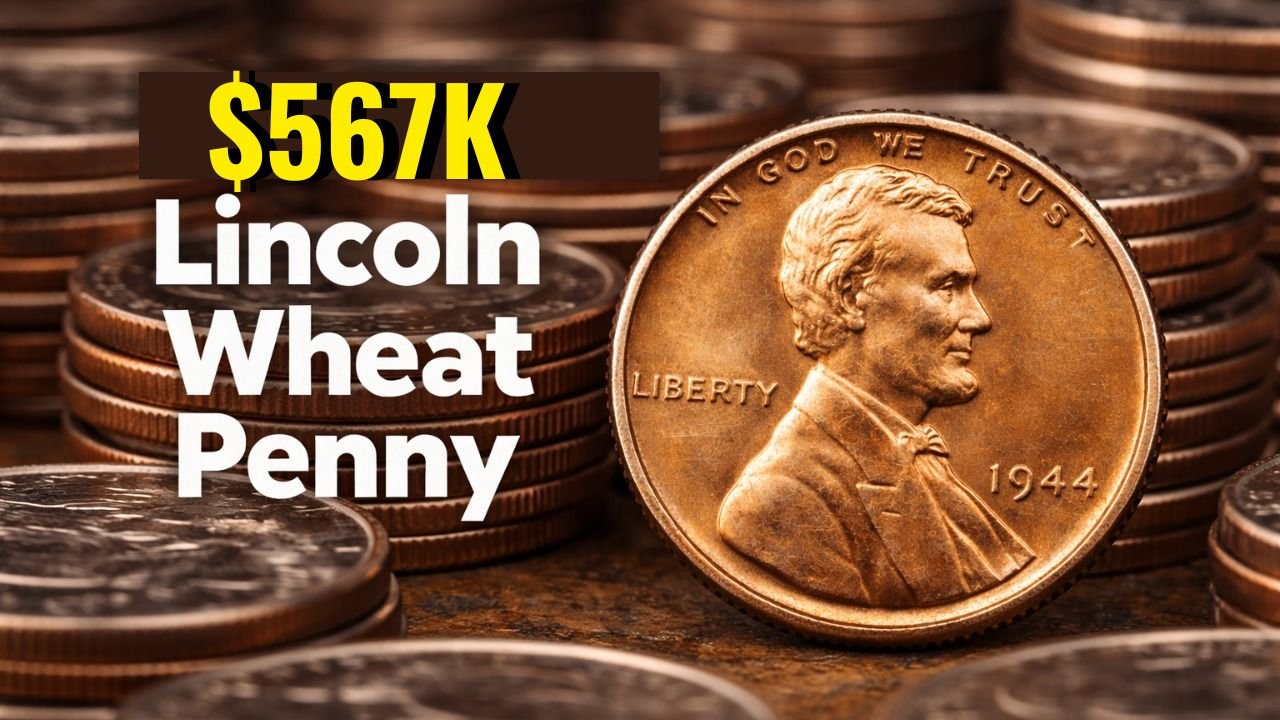
Rare Lincoln Wheat Penny Worth $567K: Imagine walking into a store, paying with pocket change, and accidentally handing over a coin worth more than a luxury car. Sounds impossible, right? Well, it’s happened before. The Lincoln Wheat Penny, made from 1909 to 1958, has become one of the most hunted coins in America. Just recently, a rare one sold for an insane $567,000. That’s not a typo – half a million dollars for a single penny. These coins show Honest Abe on the front with two wheat stalks on the back, which is why collectors call them “wheat backs” or “wheat cents.” What makes them special isn’t just their age. It’s the stories they carry through two world wars, the Great Depression, and the birth of rock and roll. The coolest part? You could find one today without spending a dime.
Why These Old Coins Matter So Much
When the first Lincoln Penny appeared in 1909, it broke all the rules. Before then, US coins only showed imaginary ladies and eagles, never real people. Putting Lincoln on the penny was a massive deal because everyone still remembered him as the president who saved the nation during the Civil War. The wheat stalks on the back celebrated America’s farmers who fed the country. For fifty years, these pennies sat in lunch counters, soda machines, and piggy banks across America. They bought candy during the Roaring Twenties, helped families survive the Depression, and called home from WWII battlefields. When they switched to the Lincoln Memorial design in 1959, people suddenly realized these old wheat pennies would never be made again. That’s when the treasure hunt really began.
The Heavy Hitters: Rare Wheat Pennies Worth Big Money
Here’s a table showing the most valuable wheat pennies you should know about. Print this out or save it on your phone for reference!

| Coin Type | What Makes It Special | How Much It’s Worth | Cool Fact |
|---|---|---|---|
| 1909-S VDB | First year, San Francisco made, designer’s initials on back | $600 to $3,500+ | Initials caused drama and were quickly removed |
| 1914-D | Made in Denver, super low numbers | $200 to $15,000+ | One of the toughest to find in good shape |
| 1922 “No D” | Missing Denver mint mark by accident | $500 to $35,000+ | Worn-out die wiped the letter off |
| 1931-S | San Francisco issue, Depression-era | $70 to $1,800+ | Almost nobody needed new coins in 1931 |
| 1943 Bronze | Made of copper when it should be steel | $100,000 to $250,000+ | Only a handful exist – major mint mistake |
| 1955 Double Die | Letters and numbers look doubled | $1,500 to $15,000+ | You can see the doubling without a microscope |
What Makes a Penny Jump from 1 Cent to $500K?
Three things decide if your penny is pocket change or a life-changer. First is rarity. Some years and mint locations made way fewer coins than others. The 1931-S had tiny numbers because the Depression meant people weren’t spending much. Second is condition. A penny that never got used and still looks brand new can be worth hundreds of times more than a beat-up one of the same year. Collectors are super picky about details like the shine on Lincoln’s cheek and how sharp the wheat lines are. Third is errors. When the mint messes up – like using the wrong metal or stamping letters twice – those mistakes become gold to collectors. Put all three together on one coin, and you’ve got a six-figure penny.
Quick Tips for Beginner Coin Detectives
Want to start your own hunt? Here’s how to get going without spending much money:
- Check every penny that comes your way. Look at the date and search for tiny D or S under the year. You never know what might show up.
- Never ever clean your coins. This is the number one rookie mistake. Cleaning scratches the surface and destroys value. Leave them exactly as found.
- Get a magnifying glass with at least 10x power. Many valuable details are tiny and need magnification to spot.
- Look up coins online before getting excited. Compare yours to pictures of the real rare ones so you know what you actually have.
- Ask older relatives if they have old coins sitting around. Grandparents and great-aunts often have jars of change from decades ago just gathering dust.
- Keep a notebook of what you find. Write down dates, mint marks, and interesting features. It helps you learn and track your collection.
How to Tell If Your Coin Is Worn or Wow
Learning to judge condition is like leveling up in a video game. It takes practice but gets easier over time. Professional graders use a scale from 1 to 70, with 70 being absolutely perfect. Most wheat pennies you’ll find score between “Good” (G-4) and “Very Fine” (VF-20). On a Good coin, Lincoln’s suit lines are mostly gone and the wheat heads look smooth. On a Very Fine coin, you can see details in his coat and the wheat lines are clear. Mint State coins (MS-60 and above) never circulated, so they keep their original copper color and sharpness. If you think you’ve found something special, you can send it to companies like PCGS or NGC who put it in a sealed holder with an official grade. This costs money but makes the coin worth way more if it’s truly rare.
Building Your Own Collection Without Breaking the Bank
You don’t need thousands of dollars to start collecting wheat pennies. Most are still cheap and fun to hunt. A great goal is putting together a complete set from every year between 1909 and 1958. That’s 50 years of history you can hold in your hands. Start by getting a folder or album designed for wheat cents. Then hit the banks and ask for rolls of pennies to search through. This is called “coin roll hunting” and it’s totally free except for the money you use to buy the rolls (which you get back when you return the ones you don’t want). Hit up flea markets and garage sales where people sometimes sell old coins without knowing their value. Join online coin communities where collectors share finds and help each other learn. The journey matters as much as the destination.
Frequently Asked Questions
Q: How do I know if my wheat penny is one of the valuable ones?
A: Start with the date and mint mark. Compare to the key dates in our table. Look closely at the letters for any doubling. Check the condition – does it look brand new or really worn? If you think it might be special, show it to a coin dealer or post pictures in a coin collecting forum online.
Q: What’s the most a wheat penny has ever sold for?
A: The record goes to a 1943 bronze penny that sold for over $1.7 million at auction. The $567,000 one mentioned earlier is also in the top tier. These are the extreme exceptions, though. Most rare wheat pennies sell for hundreds or a few thousand dollars.
Q: My 1943 penny is silver and sticks to a magnet. Is it valuable?
A: Nope, that’s exactly what a normal 1943 penny should be. They made them from steel coated with zinc during WWII to save copper for the war. These are common and worth maybe 50 cents to a few dollars depending on condition. The rare ones are copper-colored and don’t stick to magnets.
Q: What does “double die” actually mean?
A: It’s a mistake that happens when they’re making the stamp that presses the coins. The design gets stamped into the metal twice, slightly off-center, creating a shadow effect. The 1955 double die is the most famous because you can clearly see the doubling in “LIBERTY” and the date without any help.
Q: Should I get my coins graded by a professional service?
A: Only if you’re sure you have something rare in great condition. Grading costs $20 to $50 per coin, so it’s not worth it for common ones. If your coin matches a key date and looks really nice, grading can verify it’s real and bump up the selling price big time.
Q: Where can I find wheat pennies besides banks?
A: Ask family members if they have old coins stashed away. Check estate sales and flea markets where people sell collections without knowing values. Some coin shops sell “junk boxes” of cheap wheat pennies you can search through. Online marketplaces work too, but be careful about overpaying and watch out for fakes.