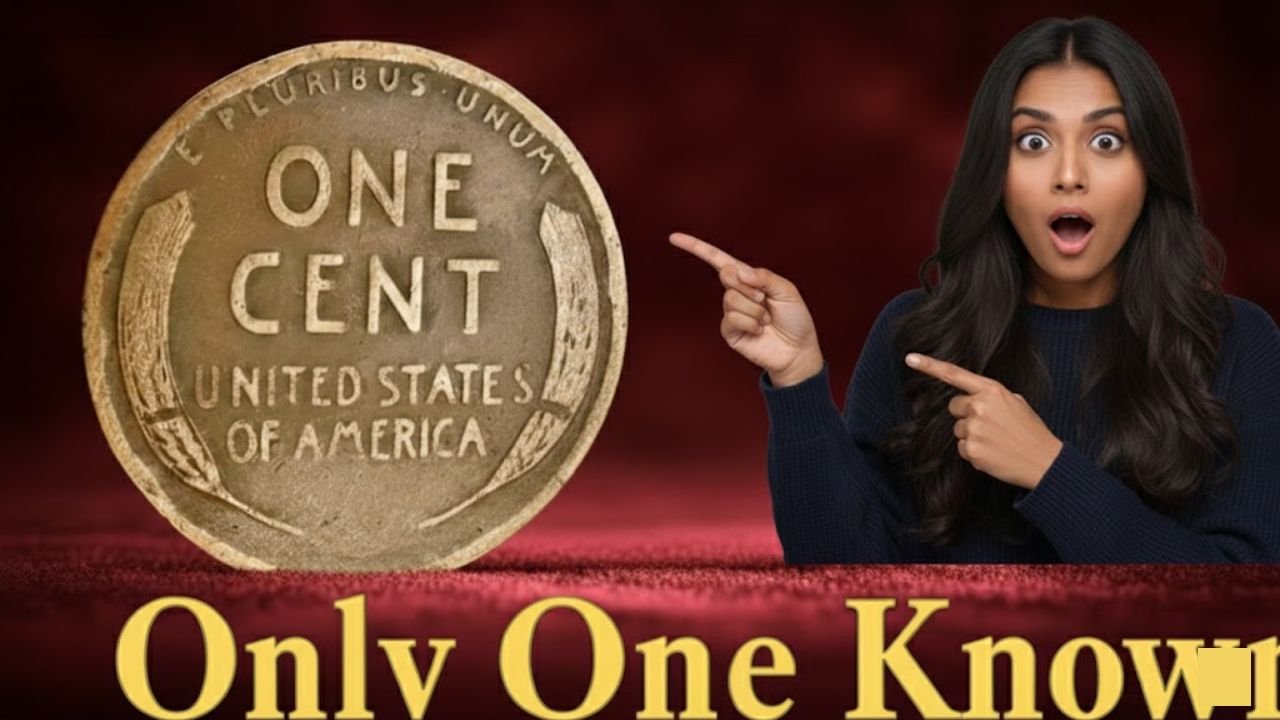
Picture this: You’re cleaning out your room and find an old coffee can full of pennies your grandpa saved. You dump them out, and one looks a little different. Congratulations – you might be holding $867,000 in your hand. Sounds fake, right? But it’s real. Some Lincoln Wheat Pennies, made between 1909 and 1958, have sold for almost a million dollars. These aren’t ordinary coins. They’re pieces of American history small enough to fit in your pocket. The front shows Abraham Lincoln looking dignified, and the back has two wheat stalks that remind us of America’s farming roots. For fifty years, these pennies bought candy, paid for newspapers, and jingled in people’s pockets through good times and bad. Now some of them are worth more than houses. Lincoln Wheat Penny Worth $867,000 Collector’s Value Guide
When Lincoln First Appeared on a Coin
Back in 1909, something huge happened in the coin world. For the first time ever, the US put a real person on a regular coin. Before Lincoln, coins showed made-up ladies and eagles. But Americans loved Lincoln so much that they broke tradition for him. The design came from a sculptor named Victor David Brenner, and people went crazy for it. Those wheat stalks on the back? They symbolized American farms feeding the world. The penny became an instant hit and stayed in pockets through World War I, the Roaring Twenties, the Great Depression, World War II, and the 1950s. When they finally changed the design in 1959, people realized these wheat pennies would never be made again. That’s when collecting them became a national hobby.
The Million-Dollar Coins You Need to Know
Here’s a handy table showing the wheat pennies that make collectors lose their minds. Save this for your next treasure hunt!

| Coin Variety | What Makes It Special | Approximate Value | Quick Story |
|---|---|---|---|
| 1909-S VDB | San Francisco mint with designer’s initials | $600 – $100,000+ | Initials caused controversy and were quickly removed |
| 1914-D | Denver mint, super low production | $200 – $50,000+ | One of the hardest to find in nice condition |
| 1922 “No D” | Missing mint mark by accident | $500 – $75,000+ | Worn-out die wiped the D clean off |
| 1931-S | Depression-era, tiny mintage | $70 – $10,000+ | Nobody had money for new coins in 1931 |
| 1943 Copper | Made of bronze when it should be steel | $100,000 – $1.7M+ | The most famous mint mistake in history |
| 1955 Double Die | Letters and numbers look doubled | $1,500 – $50,000+ | You can see the ghost image with your naked eye |
What Makes a Penny Worth Almost a Million Bucks?
Three big things determine if your penny is pocket change or a life-changer. First is rarity. Some years and mint locations made way fewer pennies than others. The San Francisco mint in 1909? Only so many. The Denver mint in 1914? Even fewer. Second is condition. A penny that never got spent and still looks fresh from the mint can be worth thousands more than a worn-out one of the same year. Collectors obsess over things like the shine on Lincoln’s coat and the sharpness of those wheat lines. Third is errors. When the mint screws up – using the wrong metal, stamping letters twice, missing a mint mark – those mistakes become gold. Put all three together and boom, you’ve got a six-figure penny.
Beginner Tips for Future Millionaires
Want to start hunting without spending much? Here’s how to begin:
- Check every penny that comes your way. Look at the date and search for tiny D or S under the wheat stalks on the back. You never know what might show up.
- Grab a magnifying glass with good power. Some valuable details are tiny and need zooming in to spot.
- Never ever clean your coins. This is the biggest rookie mistake. Cleaning scratches the surface and destroys value instantly. Leave them exactly as you found them.
- Learn the key dates from our table. Memorize them. The 1909-S VDB, 1914-D, and 1922 No D are your new best friends.
- Ask family members if they have old coins lying around. Grandparents, aunts, uncles – someone might have a jar of change from fifty years ago.
- Get a coin folder to organize your finds. It makes collecting way more fun and helps you see what you’re missing.
How to Tell if Your Coin Is a Gem or Just Okay
Learning to judge condition is like leveling up in a game. It takes practice but gets easier. Professional graders use a scale from 1 to 70, with 70 being absolutely perfect. Most wheat pennies you’ll find score between “Good” (G-4) and “Very Fine” (VF-20). On a Good coin, Lincoln’s suit lines are mostly gone and the wheat heads look smooth. On a Very Fine coin, you can see details in his jacket and the wheat lines are clear. Mint State coins (MS-60 and above) never got used, so they keep their original reddish color and sharp details. If you think you’ve found something special, companies like PCGS and NGC will grade it and put it in a protective holder. This costs money but makes a rare coin worth way more.
Smart Ways to Start Your Collection Today
You don’t need rich parents to collect wheat pennies. Most are still cheap and fun to find. A great goal is collecting one penny from every year between 1909 and 1958. That’s fifty years of history you can actually hold. Start by visiting banks and asking for rolls of pennies to search through. This is called “coin roll hunting” and it costs nothing except the money you use to buy the rolls (which you get back when you return the ones you don’t want). Hit up garage sales and flea markets where people sometimes sell old coins without knowing their value. Join online groups where collectors share finds and help each other learn. The hunt is half the fun, and who knows – you might just find that $867,000 penny someday.
Frequently Asked Questions
Q: How can I tell if my wheat penny is valuable?
A: First, check the date and look for a D or S under the wheat stalks on the back. Compare it to our key dates table. Look closely at the letters for any doubling. Check the condition – does it look brand new or really worn? If you think it might be special, show it to a coin dealer or post pictures in a coin collecting forum online.
Q: What’s the most a wheat penny has ever sold for?
A: The record belongs to a 1943 copper penny that sold for over $1.7 million at auction. The $867,000 one mentioned earlier is also in the top tier, probably a perfect 1909-S VDB or 1914-D in amazing condition. Most rare wheat pennies sell for hundreds or a few thousand dollars.
Q: My 1943 penny is silver and sticks to a magnet. Is it worth anything?
A: That’s exactly what a normal 1943 penny should be. They made them from steel coated with zinc during WWII to save copper for the war effort. These are common and worth maybe 50 cents to five dollars depending on condition. The rare ones are copper-colored and don’t stick to magnets at all.
Q: What does “double die” actually mean?
A: It’s a mistake during the die-making process. The design gets stamped into the metal twice, slightly off-center, creating a ghost-like double image. The 1955 double die is the most famous because you can clearly see the doubling in “LIBERTY” and the date without any magnification.
Q: Should I get my coins professionally graded?
A: Only if you’re pretty sure you have something rare in really nice condition. Grading costs money, so it’s not worth it for common coins. If your coin matches a key date and looks sharp, grading can verify it’s authentic and seriously increase its selling price.
Q: Can I still find wheat pennies in my change today?
A: Yes, but it’s getting harder every year. Most have been picked out by collectors over the decades. Still, people find them in bank rolls, coin jars, and old furniture all the time. That’s what makes it exciting – you never know when one might show up.