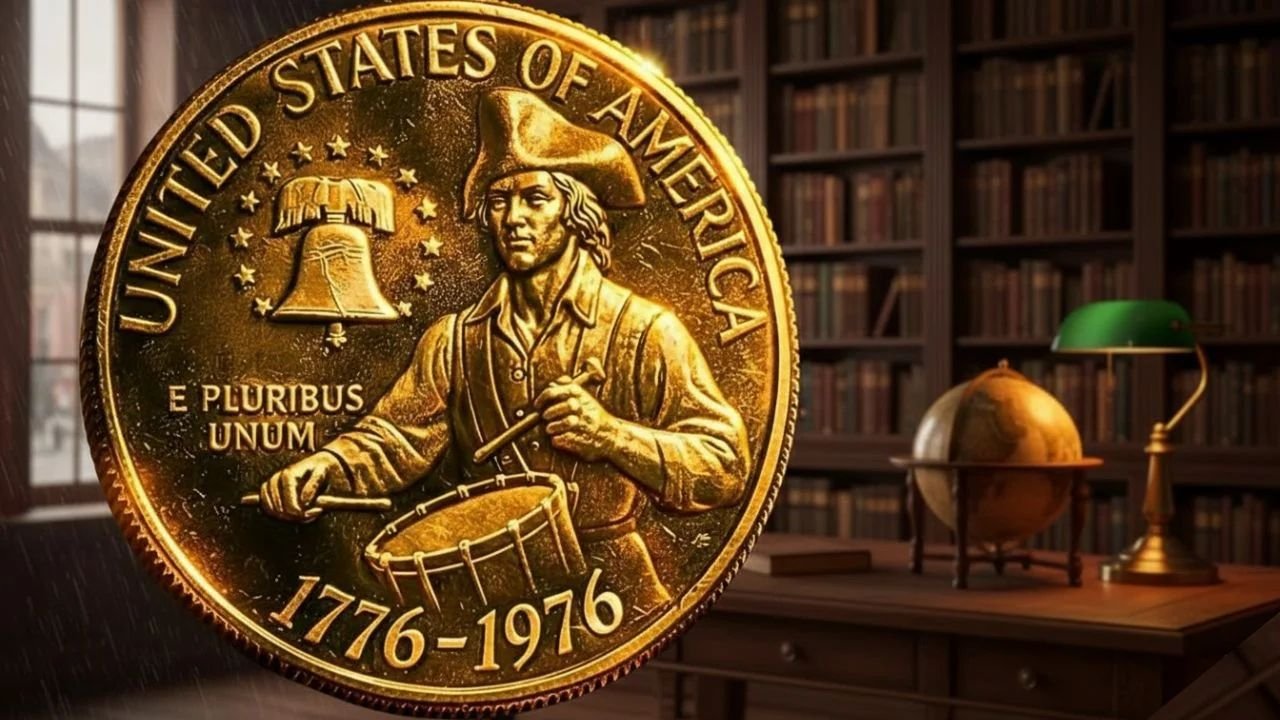
The Rare 1776–1976 Bicentennial Quarter is not just another coin you casually receive in change. It represents a special chapter in American history when the nation celebrated 200 years of independence. Although millions of these quarters were produced, some carry higher value because of their metal content, condition, or rare minting errors. For collectors, this coin blends history, emotion, and the excitement of discovery.
Historical Background of the Bicentennial Quarter
During the mid-1970s, the United States prepared for a nationwide bicentennial celebration. To mark this milestone, the United States Mint introduced special designs for circulating coins. The quarter retained the familiar portrait of George Washington on the front, originally designed by John Flanagan, but added the unique dual date “1776–1976.” This decision instantly separated it from regular Washington quarters and turned it into a keepsake for millions of Americans.
Design That Captures the Spirit of Independence
What truly makes the Bicentennial Quarter stand out is its reverse design. Instead of the traditional eagle, the back features a colonial drummer boy created by Jack L. Ahr. Alongside the drummer are a victory torch and thirteen stars, representing the original colonies. This imagery reflects unity, struggle, and celebration, making the coin emotionally meaningful even for those who are not collectors.
Metal Composition and Mint Variations
Bicentennial Quarters were struck in two main compositions. Most coins found in circulation are copper-nickel clad, which were produced in large numbers for everyday use. In addition, special 40 percent silver versions were made mainly for collectors. These silver coins were issued in proof and uncirculated sets, mostly from the San Francisco Mint. This difference in metal is one of the biggest factors affecting value today.
Bicentennial Quarter Full Information Table
| Feature | Details |
|---|---|
| Years of Issue | 1975–1976 (all dated 1776–1976) |
| Obverse Design | George Washington portrait |
| Reverse Design | Colonial Drummer Boy by Jack L. Ahr |
| Circulation Composition | Copper-nickel clad |
| Collector Composition | 40% silver |
| Mint Marks | Philadelphia (none), Denver (D), San Francisco (S) |
| Face Value | $0.25 |
| Common Availability | Circulation (clad), Collector sets (silver) |
What Makes a Bicentennial Quarter Valuable
Most Bicentennial Quarters are worth only their face value, but certain factors can increase their price significantly. Silver content adds immediate value due to precious metal demand. Condition also plays a major role, as coins that remain uncirculated with sharp details and original shine are far more desirable. Mint marks matter too, especially “S” mint coins, which were largely produced for collectors. The highest premiums, however, come from rare minting errors that create one-of-a-kind coins.
Rare Errors That Increase Value
Minting errors are where Bicentennial Quarters become especially exciting. Doubled dies, where letters or numbers appear doubled, are among the most sought-after. Off-center strikes and coins struck on the wrong planchet are also highly collectible. These mistakes were unintentional, making them rare and valuable. A strong error can turn a common-looking quarter into a coin worth hundreds or even thousands of dollars.
How to Identify Your Bicentennial Quarter
Identifying your coin is simple and rewarding. Start by checking for the dual date “1776–1976” and the drummer boy design. Next, look near Washington’s ponytail for a mint mark. To spot a silver coin, examine the edge—silver quarters have a solid gray edge, while clad coins show a brown copper stripe. Even if your coin is common, it still carries historical significance.
Frequently Asked Questions (FAQ)
Is every 1776–1976 Bicentennial Quarter valuable?
No. Most coins in circulation are copper-nickel clad and worth only 25 cents. Extra value depends on silver content, condition, or rare errors.
How can I tell if my Bicentennial Quarter is silver?
Check the coin’s edge. A silver version will not show a copper stripe and will appear uniformly silver-gray.

Which Bicentennial Quarter is worth the most?
Coins with major minting errors or high-grade 40% silver proof coins, especially from the San Francisco Mint, tend to command the highest prices.
Where were Bicentennial Quarters minted?
They were produced at three locations: Philadelphia (no mint mark), Denver (D), and San Francisco (S).
Should I get my coin professionally graded?
Professional grading is recommended only for silver coins, rare errors, or exceptionally well-preserved examples. For common circulated coins, grading usually isn’t worth the cost.
Final Thoughts: History in Your Hands
The 1776–1976 Bicentennial Quarter proves that everyday objects can carry extraordinary stories. Whether your coin is worth face value or a significant sum, it represents a moment when national history entered daily life. For collectors and casual finders alike, that connection to the past is often more valuable than the money itself.