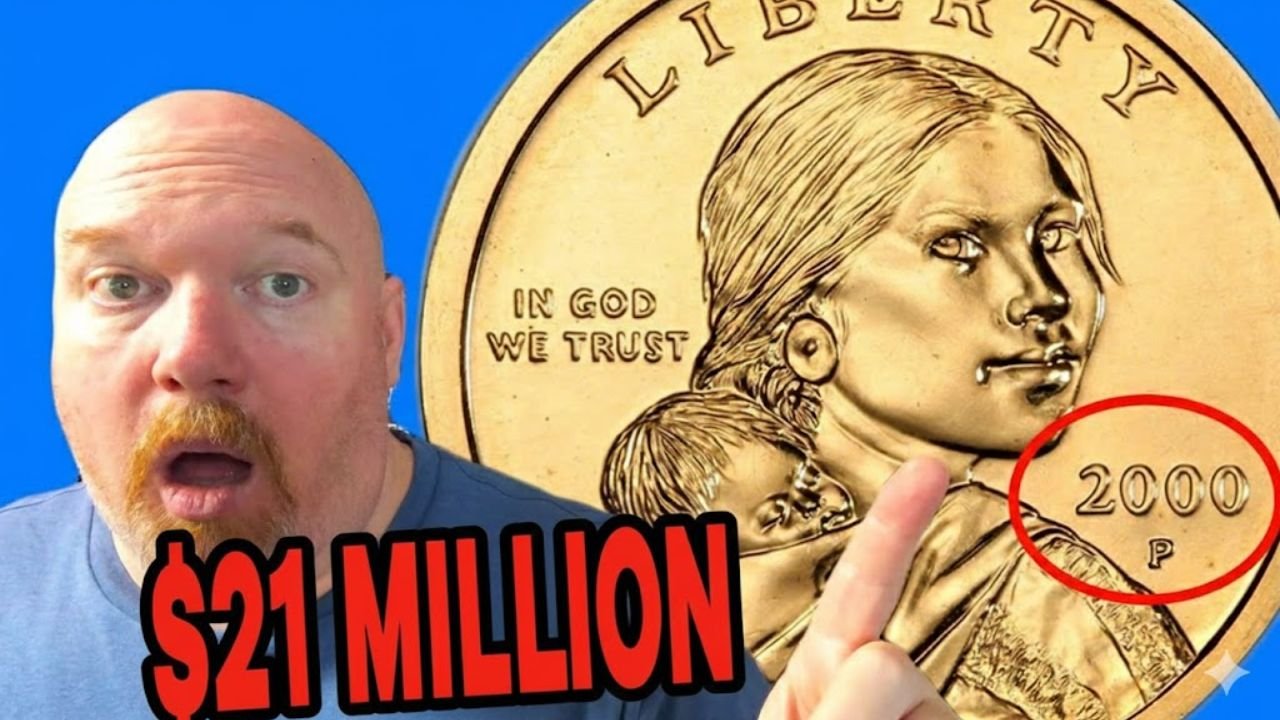
Rare $21 Million Sacagawea Dollar: Have you ever held a dollar coin and wondered if it might be worth more than just one buck? Well, grab any Sacagawea dollar you find because some of them could be worth millions. Seriously – we’re talking $21 million for one rare version! Let’s break down everything you need to know about these golden-colored coins in a way that actually makes sense.
Who Was Sacagawea Anyway?
Back in the early 2000s, the U.S. Mint wanted to create a dollar coin people would actually use. They picked Sacagawea, a Native American woman who helped explorers Lewis and Clark find their way across the western United States around 1804. She was basically a real-life hero with mad survival skills. The coin shows her carrying her baby son on her back. Artist Glenna Goodacre designed this side, and it’s pretty iconic. The original back side showed an eagle flying. Pretty cool, right?
Why Didn’t People Use These Coins?
Here’s the thing – Americans just didn’t warm up to dollar coins. We like our paper dollars. So most Sacagawea coins sat in bank vaults or got collected instead of spent. This actually made them perfect for collectors. When coins don’t get used much, the ones in perfect condition stay, well, perfect.

Fast Facts: Sacagawea Dollar Cheat Sheet
| Category | The Details |
|---|---|
| Years Made | 2000–2008 (original design), then new designs from 2009–today |
| What It’s Made Of | Copper core with manganese brass coating (golden color, but not real gold) |
| Weight | 8.1 grams – about as heavy as 2 paperclips |
| Size | 26.5 millimeters across (slightly larger than a quarter) |
| Edge | Smooth – no ridges like quarters have |
| Mint Marks | P (Philadelphia), D (Denver), S (San Francisco) – check the edge! |
| Super Rare Versions | 2000 Cheerios Dollar, 2000-P Mule Error, 2000-P Wounded Eagle |
| Grade Matters? | YES – certified coins from PCGS or NGC sell for way more |
The Cereal Box Millionaires
Okay, this story is wild. In 2000, the U.S. Mint teamed up with Cheerios. They put millions of Sacagawea dollars inside cereal boxes so families could find them. Fun, right? But here’s the twist nobody knew at the time. About 5,500 of those Cheerios box coins were struck with special prototype dies. The eagle’s tail feathers on the back look super sharp and detailed – way different from regular coins. Fast forward to today, and those “Cheerios Dollars” can sell for thousands, even tens of thousands of dollars. One super perfect example hit the market for an insane amount. Always check your grandma’s coin jar!
Cool Varieties That Collectors Obsess Over
If you’re hunting through pocket change, here’s what to watch for:

- 2000-P Cheerios Dollar: Look for detailed tail feathers on the eagle
- 2000-P Wounded Eagle: There’s a die scratch on the eagle’s belly that looks like an injury
- 2000-P Mule Error: This one’s insanely rare – it accidentally used a quarter design on one side and dollar design on the other. Like, only a few exist.
- 2001-S Proof: Low mintage means collectors want these bad boys
Collector Tips That Actually Work
- Start simple – collect one coin from each year (2000-2008). It’s cheap and fun
- Check every dollar coin you get as change – you never know
- Buy a cheap magnifying glass to inspect details
- Never clean old coins! Cleaning actually destroys their value
- Join online coin forums to learn from experienced collectors
- Store coins in protective holders, not loose in a drawer
How to Spot a Valuable One
Condition is EVERYTHING. A beat-up circulated coin is worth one dollar. A pristine, never-circulated coin could be worth way more. Professional graders look at coins under microscopes and assign grades from 1 to 70. Above 65 is where the money’s at.
Frequently Asked Questions
Q: Is my Sacagawea dollar worth more than $1?
A: Probably not. Most circulated ones are just regular dollar coins. Only uncirculated ones or rare errors have extra value.

Q: How do I find the mint mark?
A: Look at the edge of the coin – literally turn it sideways. You’ll see P, D, or S stamped there.
Q: What’s the most valuable Sacagawea dollar?
A: The 2000-P Mule error. Only a few exist, and they’ve sold for over $200,000 at auction. Some experts think certain perfect specimens could hit millions.

Q: Can I find Cheerios dollars in cereal boxes today?
A: Nope – that promotion ended in 2000. You’d have to buy them from collectors now.
Q: Should I get my coin graded?
A: Only if you’re sure it’s a rare variety AND it looks perfect. Grading costs money, so don’t waste it on common coins.
Q: What happened to the eagle design?
A: In 2009, they switched to the “Native American” series. Sacagawea stayed on the front, but the back changes every year to honor different Native American contributions.
Bottom Line
Collecting Sacagawea dollars is one of the most affordable ways to start a coin hobby. You can build a complete set without spending much, and who knows? Maybe you’ll get lucky and find a Cheerios dollar hiding in plain sight. Even if you don’t strike it rich, you’ll learn some cool history and have fun hunting. That’s what collecting’s really about anyway.