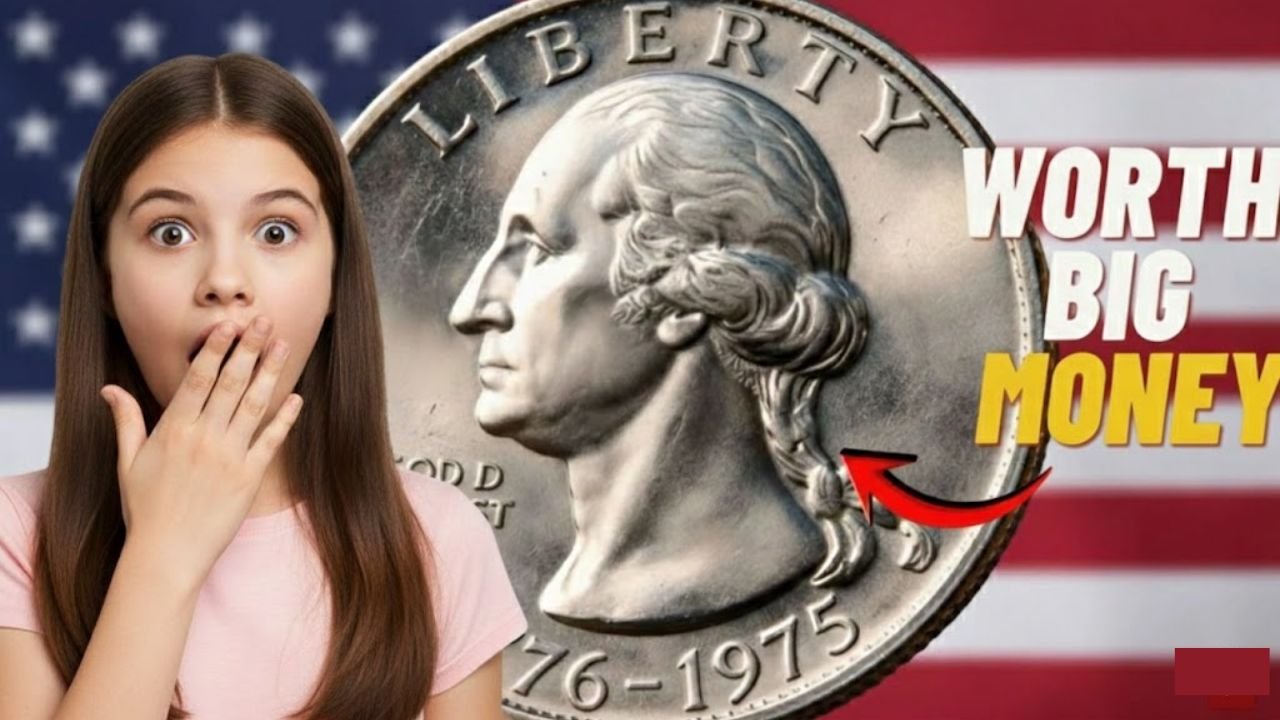
Rare Bicentennial Quarter Valued at $5.7 Million: Back in 1976, America threw a huge party for its 200th birthday. The US Mint made special quarters to celebrate, with a colonial drummer boy on the back. These coins showed the date “1776-1976” – a cool way to mark two centuries of history. The government made billions of these quarters. Most are still just worth 25 cents today. But here’s the exciting part: a tiny number of them are worth mind-blowing money. Like, buy-a-house money. One rare Bicentennial quarter reportedly sold for $5.7 million!
Why This Quarter is Special
The Mint wanted the 1976 quarter to look different from regular coins. They held a contest for artists, and Jack L. Ahr won with his design of a drummer boy surrounded by 13 stars. Those stars stood for the original colonies. Most of these quarters were made from copper and nickel – the same stuff regular quarters are made of. But the Mint also created special versions with 40% silver for collectors. That’s where things get interesting. Here’s the deal though – you can’t just assume any 1976 quarter is valuable. You need to know exactly what to look for.
What Makes a Quarter Worth Big Money?
- Rare mint mistakes – Sometimes coins get struck on the wrong metal blank. Imagine a quarter printed on a dime-sized piece of metal by accident. Collectors go crazy for these errors.
- Perfect condition – Coins that look like they just left the factory, with zero scratches or wear, are worth way more.
- Special finishes – Some quarters have a mirror-like background with a frosted design. These “proof” coins were made for collectors, not for spending.
- Doubled images – If you see double letters or numbers when you look close, that’s a rare error.
Bicentennial Quarter Types at a Glance
| Type | Made From | Mint Marks | Where to Find It | What It’s Worth | How to Spot It |
|---|---|---|---|---|---|
| Regular Pocket Change | Copper & Nickel | D, S, or none | Your piggy bank, couch cushions, old jars | Still 25 cents up to $10 | Copper stripe on the edge |
| Uncirculated Set | Copper & Nickel | D, S, or none | Sold in special mint packages | $5 to $25 | Super shiny, no wear at all |
| Proof Coin | Copper & Nickel | S only | Collector proof sets | $5 to $15 | Mirror finish, super sharp details |
| Silver Proof | 40% Silver | S only | Silver proof sets | $10 to $25+ | Solid silver edge, no copper stripe |
| Silver Uncirculated | 40% Silver | S or D | Special mint sets | $8 to $20+ | Heavier than normal, silver edge |
| Error Coins | Varies | Varies | Super rare – maybe in old rolls | $100 to $100,000+ | Off-center, doubled letters, wrong metal |
Quick Tips to Spot a Valuable Quarter
- Look at the edge first. See a brown stripe? It’s common. Solid silver? Could be valuable.
- Grab a magnifying glass and check for doubled letters or numbers
- Weigh your coin if you can – silver ones are heavier (5.75g vs 5.67g)
- Check the condition – no scratches means higher value
- Look for the “S” mint mark – it’s on most special coins
- Don’t clean your coin! Collectors want original surfaces
Your Step-by-Step Check
Start by gathering any 1976 quarters you have. Check under beds, in old coin jars, or ask grandparents if they saved any. Look closely at the edge. If you see a copper line running through the middle, it’s the common type. If the whole edge looks silver, you might have something. Check the front for the date “1776-1976” and look for any weird doubling. Check the back for the drummer boy – make sure all details are sharp.

Frequently Asked Questions
Q1: My grandma gave me a 1976 quarter. Is it worth millions?
Probably not. The $5.7 million quarter is a one-of-a-kind coin with a super rare error. Almost all Bicentennial quarters are worth exactly 25 cents. But it’s still cool to have a piece of history!
Q2: How can I tell if mine is the silver version?
Look at the edge of the quarter. Regular quarters have a brown copper stripe. Silver quarters look silver all the way through. You can also weigh it – silver ones are slightly heavier.

Q3: What’s a “proof” coin?
Proof coins are specially made for collectors. They have super shiny backgrounds and the design looks frosted. They were never meant to be spent. Look for an “S” mint mark on the front.
Q4: I think I found an error. What should I do?
First, don’t get too excited – real errors are super rare. Take it to a local coin shop and ask them to look at it. They can tell you if it’s something special. Don’t clean it or try to “fix” it.

Q5: Where do people even sell rare coins?
Serious collectors use auction houses or sell through coin dealers. For really valuable coins, you want professional grading companies like PCGS or NGC to certify them first. This proves they’re real.
Q6: Why are some quarters missing a mint mark?
Quarters made in Philadelphia didn’t get mint marks back then. That’s totally normal! Coins from Denver have a “D,” and special ones from San Francisco have an “S.” No mark just means Philly made it.

The Real Treasure
Here’s the truth – you probably won’t find a million-dollar quarter in your change. But that’s okay! Collecting these quarters is still awesome because you’re holding a piece of American history. Each one connects you to the big 200th birthday party from 1976. The real fun is in the hunt. Check your change, learn about coins, and maybe start a small collection. Who knows? Even if you never strike it rich, you might discover a new hobby that teaches you about history, art, and maybe even a little patience. And hey – that quarter from your grandma? That’s already priceless.